

As UK businesses continue moving away from legacy phone lines, many are turning to SIP trunk providers to power their day‑to‑day communication. With the right partner, your calls become clearer, your costs more predictable, and your teams can work from anywhere while keeping familiar local numbers.
What Is a SIP Trunk Provider?
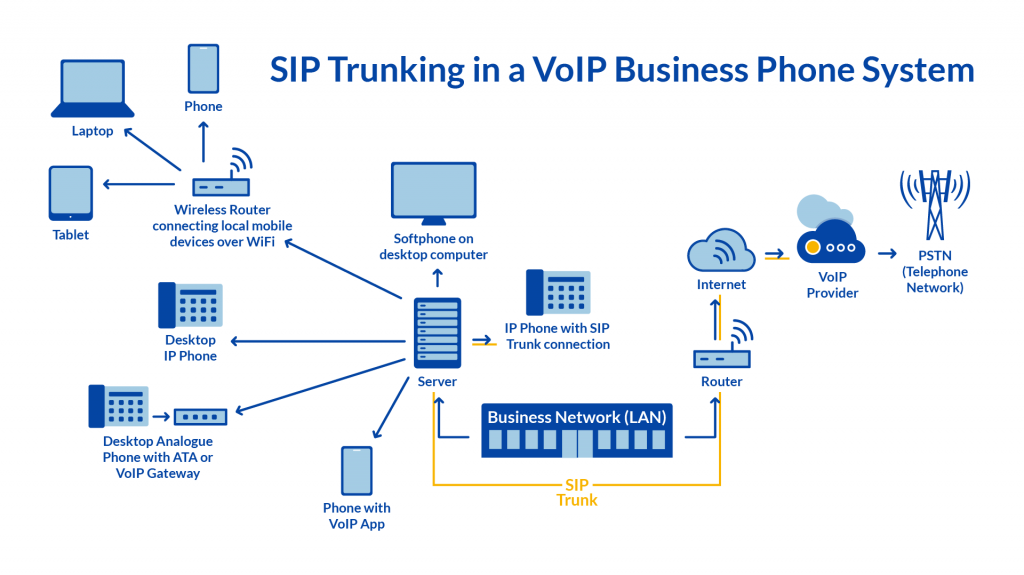
To begin with, a SIP trunk provider delivers virtual phone lines over the internet instead of traditional ISDN or PSTN circuits. They connect your PBX or cloud phone system to the public telephone network so you can make and receive calls using your data connection.
Because everything runs over IP, you can then scale channels up or down, route numbers between locations, and support remote workers without waiting for new copper lines to be installed. As a result, your telephony becomes far more agile and easier to manage.
Why SIP Trunk Providers Matter for UK Businesses
In the UK, the ongoing switch‑off of legacy ISDN lines and the rise of hybrid working mean your choice of SIP trunk providers is now more critical than ever. A strong provider not only maintains business continuity but also keeps numbers live during outages and routes calls intelligently between offices, home workers, and contact centres.
For many organisations, telecoms are tightly linked to revenue and customer experience. Whenever phones fail, orders, bookings, and support queues quickly suffer. Therefore, a reliable SIP trunk provider helps reduce that risk with resilient infrastructure, geographic redundancy, and automatic failover.
Key Benefits of SIP Trunk Solutions
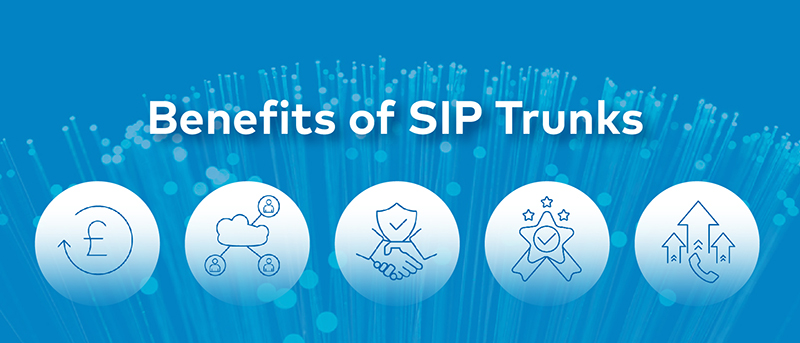
Modern SIP services bring a wide range of advantages to UK organisations of all sizes. Among the most important sip benfts of sip trunk are the following:
- To start, lower costs for domestic and international calls thanks to IP‑based routing and flexible tariffs.
- In addition, easy scalability, allowing you to add or remove concurrent call channels in minutes instead of ordering new physical lines.
- Furthermore, support for voice, video, and unified communications over a single converged connection.
- Finally, business continuity features such as automatic rerouting to mobiles, backup offices, or hosted PBXs.
Moreover, UK‑focused SIP trunk providers understand local number ranges, emergency call handling, and regulations, which makes deployment smoother and more compliant from day one.
What to Look for in a UK SIP Trunk Provider
However, not all SIP trunk providers offer the same level of resilience, support, or flexibility, so it is essential to evaluate them carefully. When shortlisting, you should consider:
- Network reliability: Redundant data centres, carrier‑grade infrastructure, and strong SLAs for uptime and voice quality.
- Security: SIP firewalls, encryption options, fraud monitoring, and clear controls to prevent unauthorised call spend.
- UK expertise: Local number porting, familiarity with BT switch‑off timelines, and a solid grasp of UK regulatory requirements.
- Support model: Responsive UK‑based support teams who understand PBX platforms such as 3CX, Microsoft Teams, and other IP PBXs.
For example, providers like Wavetel Business focus on delivering UK‑centric SIP services, combining competitive pricing with features such as flexible numbering, disaster recovery routing, and tight integration with popular business phone systems.
How SIP Trunk Providers Support Growth and Hybrid Work
As teams spread across offices, homes, and even international locations, SIP trunk providers give UK organisations a consistent and future‑ready phone strategy. You can maintain local UK numbers, route calls to any device, and spin up new sites or campaigns without waiting on physical installations.
This flexibility becomes especially powerful when you combine a capable PBX with a well‑designed trunk configuration. Features such as DID routing, call queues, analytics dashboards, and automated failover all rely on stable trunks underneath. With the right partner, you gain control over call flows today and the capacity to scale confidently tomorrow.
Ultimately, by understanding the sip benfts of sip trunk and choosing carefully from UK‑focused providers, businesses can modernise their communications stack, stay resilient through change, and remain competitive as the country fully transitions away from traditional lines.
Conclusion
In summary, UK organisations can no longer rely on ageing ISDN and PSTN infrastructure if they want resilient, flexible, and cost‑effective communications. By selecting experienced SIP trunk providers that truly understand the UK market, businesses gain reliable voice services, simpler scaling, and the confidence to support hybrid work and future growth. When you pair the right provider with a modern PBX, your phone system becomes a strategic asset rather than a recurring headache.
Frequently Asked Questions (FAQ)
1. What is a SIP trunk in simple terms?
A SIP trunk is a virtual phone line that uses your internet connection instead of traditional copper lines, allowing your business phone system to make and receive calls over IP.
2. Are SIP trunks secure for UK businesses?
Yes, SIP trunks can be highly secure when configured correctly, especially if your provider offers encryption, fraud monitoring, and robust firewall policies to protect against unauthorised access.
3. How do SIP trunk providers help reduce costs?
They typically lower per‑minute rates, remove the need for multiple physical lines, and let you right‑size your concurrent call capacity, so you only pay for the channels you actually need.
4. Can I keep my existing UK phone numbers when moving to SIP?
In most cases, yes. Your SIP trunk provider can port existing geographic and non‑geographic numbers onto their network so you can migrate without changing what customers dial.
5. Do SIP trunks work with systems like 3CX or Microsoft Teams?
Most reputable SIP trunk providers offer certified or tested configurations for popular systems such as 3CX, Microsoft Teams, and other IP PBXs, making integration straightforward.
6. What internet connection do I need for reliable SIP trunking?
You need a business‑grade connection with sufficient bandwidth and low latency, preferably with QoS configured so voice traffic is prioritised over less critical data.
7. How quickly can I scale up or down with SIP trunks?
Unlike traditional lines, you can usually increase or decrease your channels within hours, or even minutes and by requesting changes through your provider’s portal or support team.